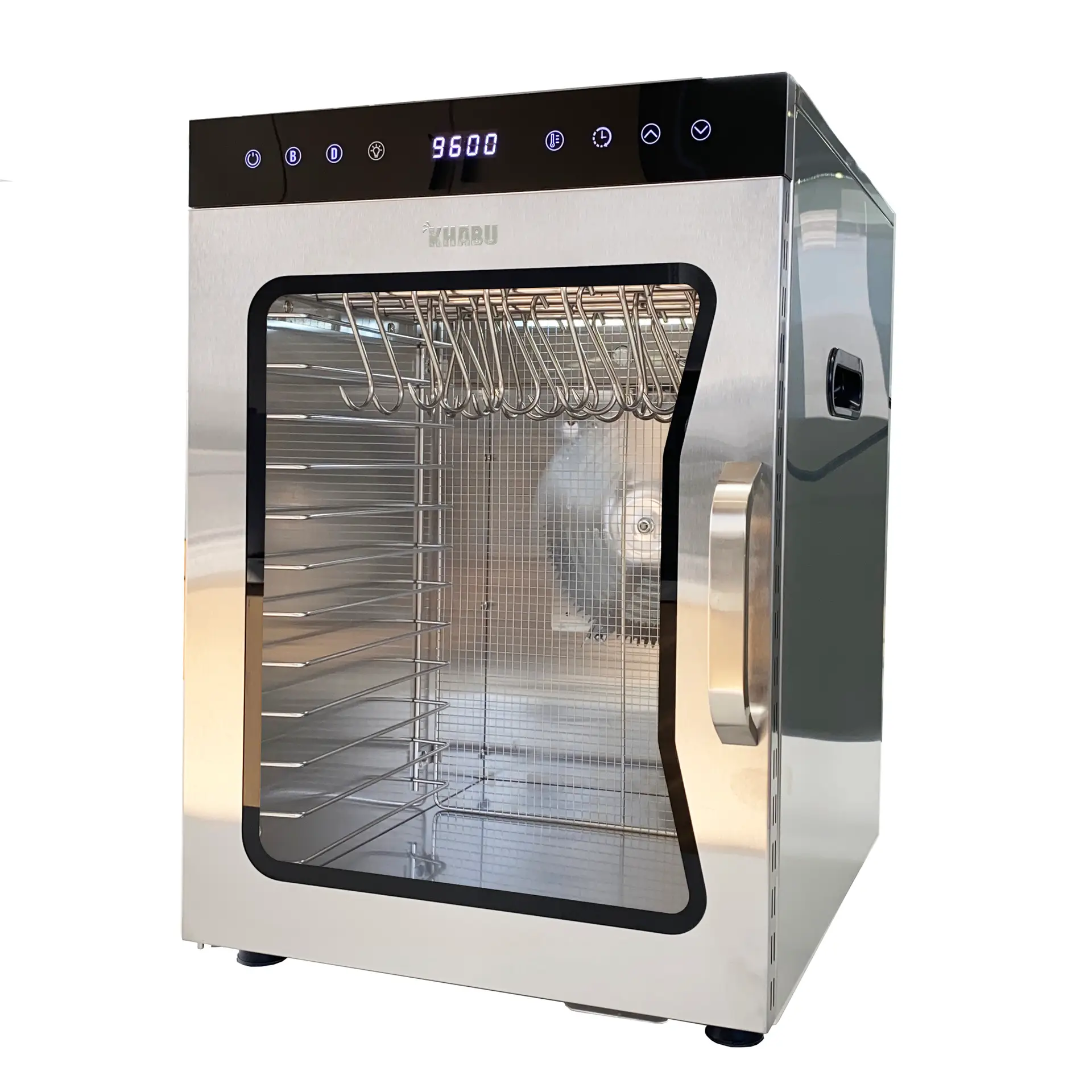
KK11 vs KK12: which home biltong maker should you buy?
Choosing between the KK11 and the KK12? The KK12 hangs longer cuts and holds 2kg more meat.
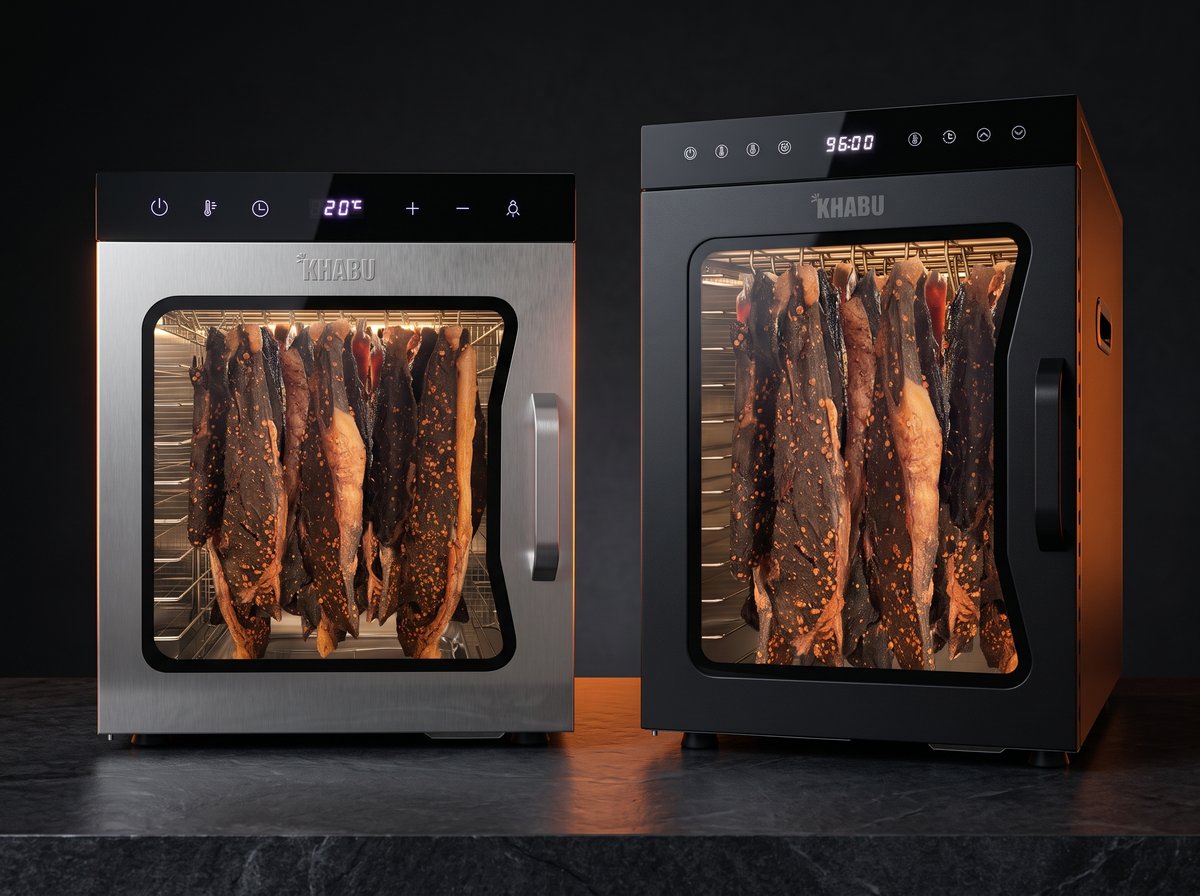
While the original biltong boss was the KK11, the KK12 is our most popular unit. Both do everything you need to make biltong at home. But the KK12 is the home unit we always wanted to make.
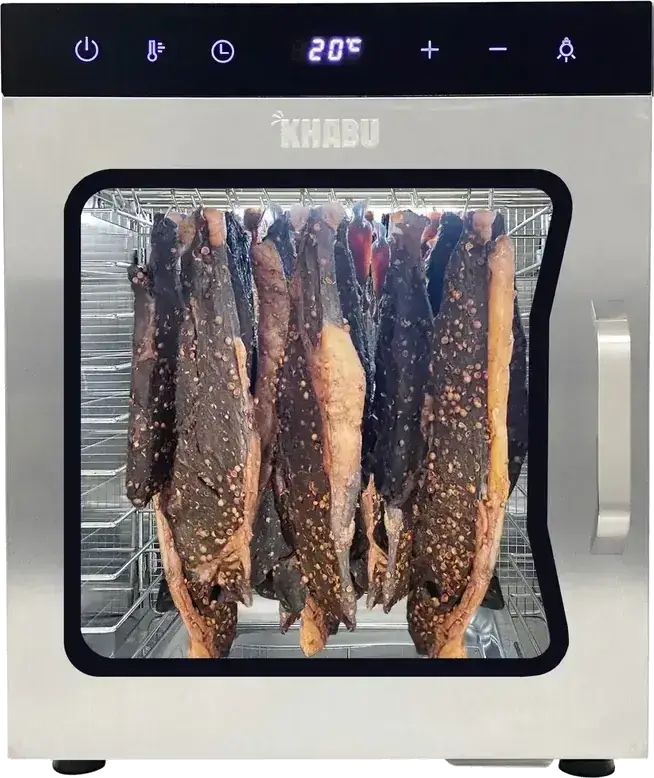
Its superior height allows you to hang much longer silverside slabs. The timer has a 96 hour set and forget function optimised for biltong drying and has room for 12 trays of biltong smalls or jerky compared to 10 for the KK11.
| KK11 | KK12 |
|---|---|
| Up to 5kg of wet meat per batch | Up to 7kg of wet meat per batch |
| 10 stainless trays and 36 stainless hooks | 12 stainless trays and 36 stainless hooks |
| Timer up to 24 hours | Biltong programme up to 96 hours |
| 43.1cm tall | 48.7cm tall |
Both stand on the same 34.5 by 39.5cm of bench, so the KK12’s extra room goes up, not out. Both have SUS304 stainless steel trays, ship free anywhere in Australia and come with a 12 months warranty on the working parts.
What Cut of Meat is Best for Biltong?
Silverside is the traditional choice for making authentic South African biltong. While following tradition is a reason in itself to choose silverside, let’s explore why it became the cut of choice in the first place.
1. Zero internal marbling prevents spoilage
Unlike steak cuts prized for internal marbling, biltong requires an ultra-lean interior. Intramuscular fat traps moisture away from circulating air, creating a breeding ground for bacteria and causing the meat to rot from the inside out. Silverside is naturally lean on the inside, ensuring the core dries safely and evenly.
2. The fat cap delivers the flavour
While internal fat causes spoilage, the thick layer of fat on the outer edge of a silverside cut is highly sought after. Because this fat cap sits entirely on the exterior of the meat strip, it is fully exposed to moving air during the hanging process. It dries efficiently, forming a rich, buttery, cured seal that infuses the meat with flavour without any risk of internal rotting.
3. Long muscle grain for perfect slicing
Silverside features a long, highly consistent, and distinct grain. This structural layout is highly practical for butchers and home-curers alike:
- It allows the raw meat to be easily sliced into long, uniform strips.
- It ensures that once dried, the biltong can be cleanly sliced against the grain for a tender, chewable texture rather than a stringy one.
4. Affordability and availability
Historically, silverside has been an economical cut from the hindquarter (known as bottom round in the US) that made bulk air-drying practical and cost-effective. Everything has gotten more expensive in recent years which is why we think making your own biltong at home makes even more sense.
Choosing the Right Meat for Biltong
Silverside (known as bottom round in the US) is the traditional and most popular cut for biltong.
Topside is a viable alternative but is slightly more tender and lacks the signature external fat cap of silverside. Rump offers excellent flavour but is significantly more expensive and less economical for bulk drying.
South Africans love “geel vet” (yellow fat) biltong, which is the external fat cap, not the internal marbling of the meat.
A standard silverside strip is typically 30 cm to 45 cm long (approx. 12 to 16 inches).
The longer slabs of silverside require the extra height of the KK12 to hang vertically without touching the floor. This is important because no part of the hanging meat should be touching the cabinet or another piece of hanging meat. The curing process relies on even airflow around the entire slab of meat to complete the curing process.
The KK11 smaller length means cutting the silverside strips against the grain to ensure it fits without touching the bottom of the cabinet.
How much biltong does a biltong box make?
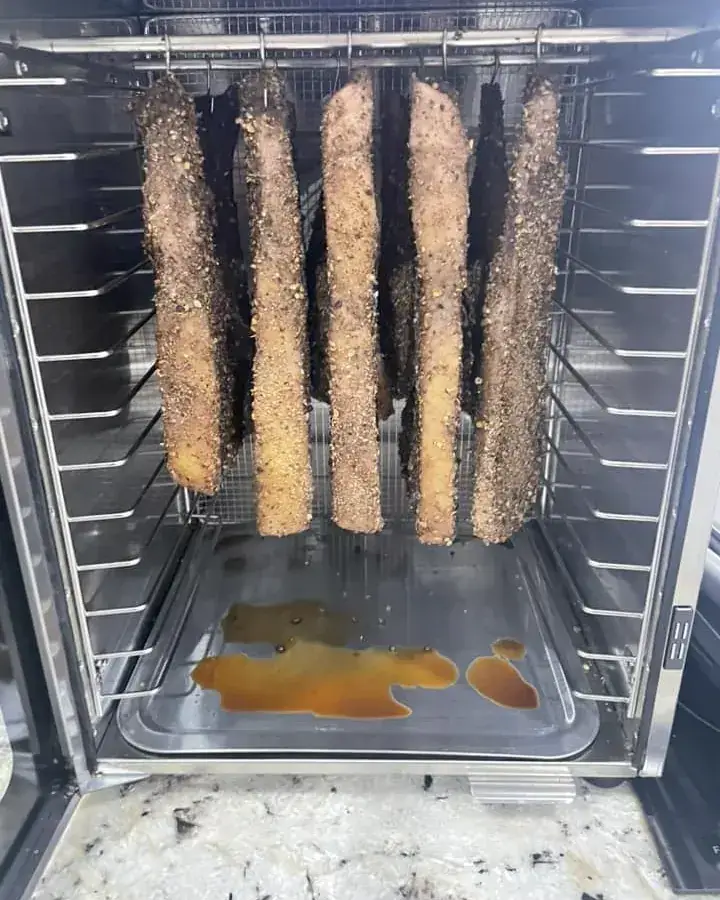
A full KK11 batch makes up to 2.5kg of biltong and the KK12 makes up to 3.5kg.
Biltong loses about half its weight as it dries. So a 5kg wet load in the KK11 gives about 2.5kg of biltong in about 72 hours. A 7kg load in the KK12 gives about 3.5kg in the same time frame.
For biltong smalls like chilli bites, KK11 turns 5kg of wet meat into about 2kg in 24 hours, and a KK12 turns 6kg into about 2.5kg. The difference comes from the additional 2 trays that come with the KK12.
The KK12 comes with 12 stainless steel trays compared to the 10 trays that come with the KK11.
Which biltong cabinet is more hands off?
The KK12. Its biltong setting runs for up to 96 hours, so a full four day batch runs automatically. The process has been designed to be so easy that a first timer who has never made biltong before can make the perfect batch of biltong from the first batch onwards:
01
Power on
02
Press ‘B’ for biltong
03
Done
The built in settings are already preconfigured to optimise the curing process for biltong. From the temperature setting, fan speed and 96 hour timer.
Having said that you can still make it your way because the KK12 gives you control over the timer and the internal temperature. Toggle between three temperature settings:
20°C
25°C
30°C
As you experiment you can play with the timer to make the final biltong wet or dry according to your taste. You are in control of your own destiny.
The KK11’s timer runs on a 24 hour timer, and you add more time each day until the biltong is the way you like it. We suggest setting a reminder on your phone so you don’t miss a day.
Don’t buy until you read this
The KK12 is our most popular unit. It makes the most sense if you make biltong regularly, have a family who can’t get enough biltong, like to use traditional silverside slabs or like the convenience of the 96 hour timer.
The KK11 is a fantastic entry level unit which is perfect if you make biltong now and then and don’t mind checking the cabinet each day. It has the same biltong optimised technology and build quality as the KK12.
That means you will get amazing biltong from day one with both cabinets.
Consider these factors before you buy:
You make traditional biltong using silverside.
Go with the KK12 so you can fit slabs up to 45cm in length.
You make biltong every weeks
Go with the extra capacity of the KK12
You have friends and family who can’t get enough biltong.
Go with the extra capacity of the KK12
You have a busy daily schedule
Go with the KK12 for the 96 hour set and forget setting.
You make batches every few months
The KK11 economical price might make more sense
You have limited space
The KK12 is taller so the KK11 might fit your home better
Check the height under your overhead cupboards or other shelving before you order. The KK11 is about 43cm tall and the KK12 is 48.7cm.
How to run your first batch
01
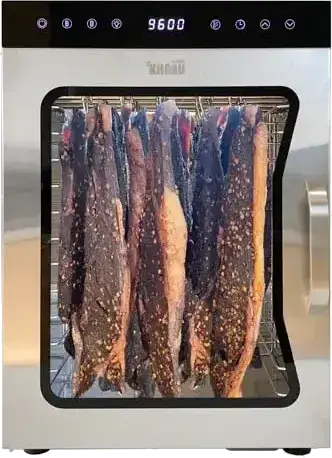
Cut your strips 20mm thick and as long as your cabinet hangs: up to 35cm in a KK11, up to 45cm in a KK12.
02
Weigh a few strips raw and write the weight and date on tape on each hook.
03
Hang the strips so they don’t touch each other or the floor of the cabinet.
04
Press ‘B’ for biltong. On the KK12, it sets automatically for 96 hours. On the KK11, it sets to 24 hours automatically.
05
From day three, weigh the same strips each day to see how much water they’ve lost.
06
When the strips hit the water-loss weight you planned for, give them a squeeze. If it’s cured to your liking then it’s done.
07
Put them in a breathable bag (paper bags are great) and store them in the fridge for 1-2 week
How long can you store biltong in the freezer?
If you have made a large batch using your KK11 or KK12 cabinet, vacuum seal the biltong and store it in the freezer. Frozen biltong will maintain its perfect quality for 6 to 12 months. Once thawed, consume it within a few days.
To maximize its shelf life and maintain flavour when freezing a batch from your KK11 or KK12:
Vacuum Sealed
The best method is to vacuum seal your biltong before you put it in the freezer. This keeps the biltong perfectly fresh for up to 12 months by removing all oxygen and stopping the drying process completely. It also prevents freezer burn.
Airtight Freezer Bags
If you don’t have a vacuum sealer keep your biltong in ziplock bags for up to 6 months. Press as much air out of the bag as possible before sealing.
Thawing Tip
Defrost the biltong completely inside its sealed bag at room temperature or in the fridge before opening it. Opening the bag too early causes moisture from the air to condense on the cold meat, making it wet and prone to molding.
KK11 vs KK12 FAQ
Yes. Both take the same 34.5 by 39.5cm of bench, but the KK12 is 48.7cm tall to the KK11’s 43cm or so. It hangs strips up to 45cm long instead of 35cm, holds up to 7kg of wet meat instead of 5kg, and has 12 trays instead of 10.
The KK12 makes up to 3.5kg of biltong from a 7kg wet load, or about 2.5kg of biltong smalls such as chilli bites or biltong leaves from 6kg of wet meat.
The KK12 cabinet comes with 12 stainless steel trays, a five bar hanging rack, 36 stainless steel hooks, a biltong recipe book to get you started and a bag of Kalahari Jäger Biltong Spice. Shipping anywhere in Australia is free.
If you plan to make biltong often or like long traditional strips, start with the KK12. If you’ll make a few batches a year and you’re home every night to reset the timer, the KK11 has everything you need out of the box. Both cabinets were built to the same quality standard and feature the same biltong optimised technology for perfect biltong from batch one.

KK11 vs KK12: which home biltong maker should you buy?
Choosing between the KK11 and the KK12? The KK12 hangs longer cuts and holds 2kg more meat.